Perfect Pound Cake {Extra Moist!}
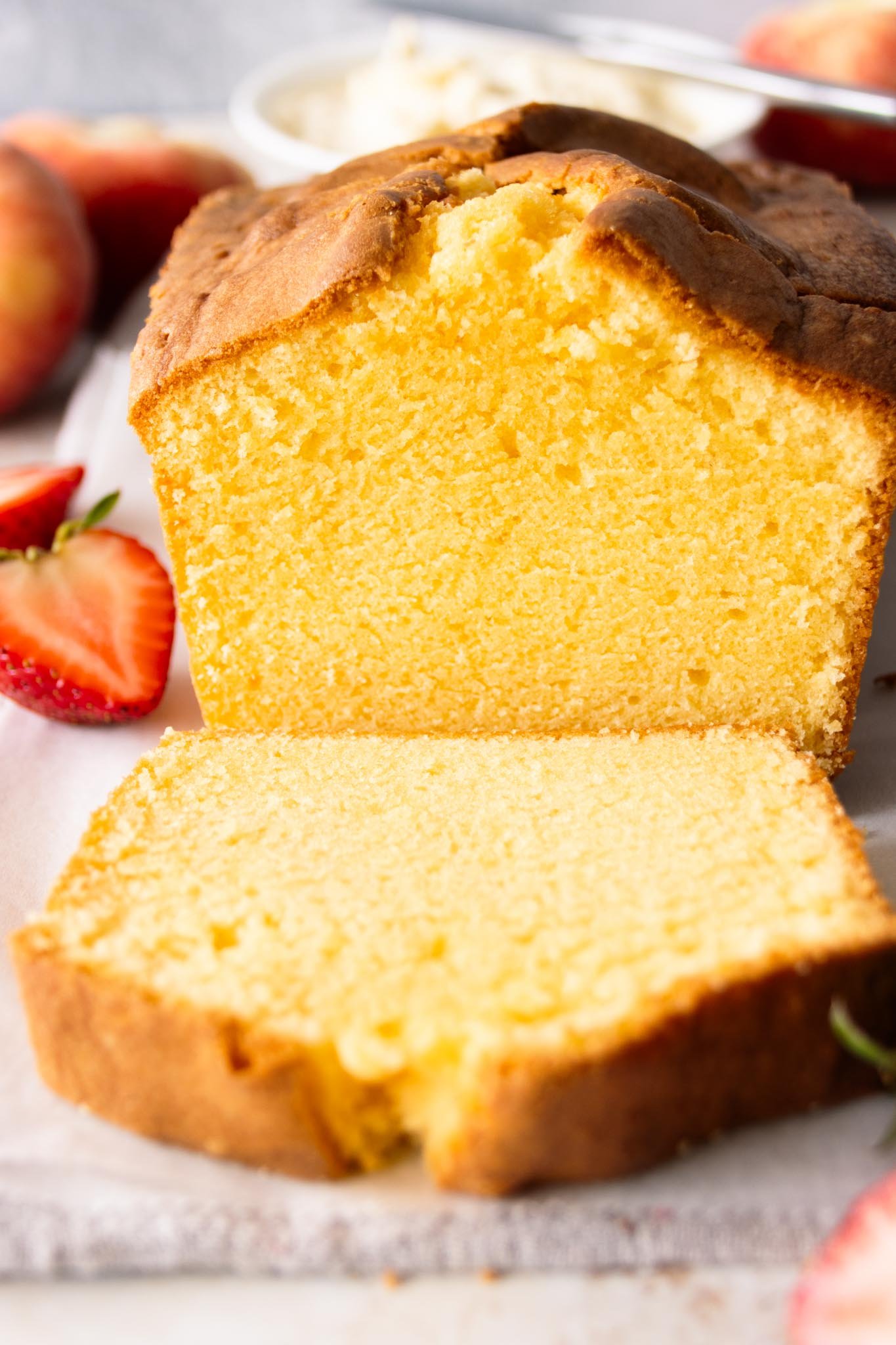
Indulgently rich, deliciously sweet, and thoroughly buttery, my perfect pound cake boasts a tightly packed crumb that’s firm and dense, yet delightfully tender, super moist, and velvety smooth - the hallmarks of a perfect pound cake.
Ingredients
- 227 g unsalted butter at room temperature, cut into 2 cm/1" cubes
- 225 g sugar
- 188 g cake flour (see Note1)
- 3 large eggs (each weighing 56-58 grams/2 ounces without shell)
- 3 egg yolks from large eggs
- 1 tsp vanilla extract
- ¼ tsp salt
- 1 tsp baking powder
- 1-2 tbsp milk (optional, only as needed)
Instructions
- Prep: Position a baking rack in the middle of the oven and preheat to 175°C(350°F). Grease the base and sides of an 8.5" x 4.5" x 2.75" standard loaf pan and dust with some flour, tapping out the excess.
- Dry ingredients (except sugar and salt): In a large bowl, combine cake flour and baking powder. Stir with a balloon whisk and sift the mixture.
- Wet ingredients: In a medium bowl or measuring cup, combine the eggs, egg yolks, vanilla extract, and salt. Beat with a fork or egg whisk until the mixture is homogeneous.
- Cream butter: Place the butter in the bowl of a stand mixer fitted with a paddle attachment (or into a large mixing bowl if using a handheld electric mixer). Start the mixer at low-medium speed and paddle the butter until smooth, about 30 seconds.Important tip! Do not cream the butter at high speed. If the butter starts to look soft or greasy at this point, it's a sign that it's too warm. Put the entire bowl (with butter) into the refrigerator and chill for 15 to 20 minutes, or until the butter loses the greasy sheen.
- Add sugar: Beat in the sugar gradually. I sprinkle in 2 to 3 tablespoons at a time (it may take up to a full minute to incorporate all the sugar).
- Once all the sugar is added, cream the butter mixture for another 1-2 minutes at medium speed, pausing once to scrape down the sides of the bowl. Stop once the butter mixture turns pale, light, and fluffy. Do not over-beat the butter.Important tip! To feel how light the butter is, scrape down the sides of the bowl with a rubber spatula - it should feel like buttercream, and most of the sugar should have dissolved. Rub a bit of the mixture between your fingers - it should feel smooth but not greasy, with very little grit from any undissolved sugar.
- Add the wet mixture: Switch to low speed. Add the egg mixture gradually (2 to 3 tablespoons at a time), beating for 10 to 15 seconds after each addition. Make sure the egg mixture is completely absorbed before adding the next lot. Once all the egg mixture is added, scrape down the sides of the bowl again. Set the mixer to medium speed, and beat for another full minute.
- Fold in the dry mixture: Lastly, add the flour mixture in 3 to 4 lots. Set the mixer speed to the lowest setting ('Stir' setting). Turn the mixer paddle on and off in short bursts, no more than a few seconds each time. Stop once the flour disappears into the butter mixture. Repeat with each addition until all the flour is added. With a rubber spatula, give the batter a few final folds to get all of the flour well incorporated. Do not over-beat or over-mix the cake batter. Important tip! A good pound cake batter should be smooth, lump-free, and have a ‘spoon-drop’ consistency (it is still a fairly thick batter and won’t be pourable). If the batter is too stiff, add 1 to 2 tablespoons of milk (not too much) to thin the batter a little.
- Fill the pan: Scoop the cake batter into the prepared pan. Level the surface and tap the pan firmly on the countertop to dislodge large air pockets.Optional: To get a distinctive split on your pound cake, run a sharp knife lengthwise, about 2 cm/1 inch deep, down the centre of the batter in the loaf pan.
- Bake: Set the timer for 50 minutes. Bake until the top of the cake rises (the top may split, this is normal) and turns golden brown. Test for doneness with a long wooden or metal skewer inserted into the centre of the cake. The cake is fully cooked when the skewer comes out clean. Remove from the oven and let the cake cool in the pan for 10 minutes before releasing onto a wire rack.Important tip: If the top starts to brown deeply towards the end of the baking time, tent the cake with aluminum foil.
Notes
#1. If you prefer a pound cake with a firmer and denser crumb, swap out the cake flour for pastry flour or all-purpose flour in a 1:1 ratio by weight (not volume). Do note that pound cakes made with all-purpose flour won't rise as much as ones made with cake flour, so I would still add the baking powder to add some lift and help open up the crumb a little.
Nutrition Information:
Serving: 1serving, Calories: 355kcal, Carbohydrates: 37g, Protein: 5g, Fat: 21g, Saturated Fat: 13g, Polyunsaturated Fat: 1g, Monounsaturated Fat: 6g, Trans Fat: 1g, Cholesterol: 156mg, Sodium: 126mg, Potassium: 49mg, Fiber: 0.5g, Sugar: 23g, Vitamin A: 717IU, Calcium: 47mg, Iron: 1mg
Did you make this recipe? Be sure to leave a rating and a review in the section below, and tag @foodelicacy on Instagram and hashtag it #foodelicacy so I can see!
