

Perfect Pound Cake {Extra Moist!}
This is my best pound cake recipe, perfected! This pound cake bakes up deliciously rich, extra moist, and sturdy without being overly dense. Follow this easy, tried, and tested recipe with my detailed tips and troubleshooting guide to ensure success – you’ll love the result!
This recipe update is the culmination of weeks of testing to bring you my best-ever version of a classic pound cake.
This is an indulgently rich, deliciously sweet, and thoroughly buttery pound cake. I can’t say enough about how a slice of a good pound cake with my favourite cup of coffee gets my day off to a great start.
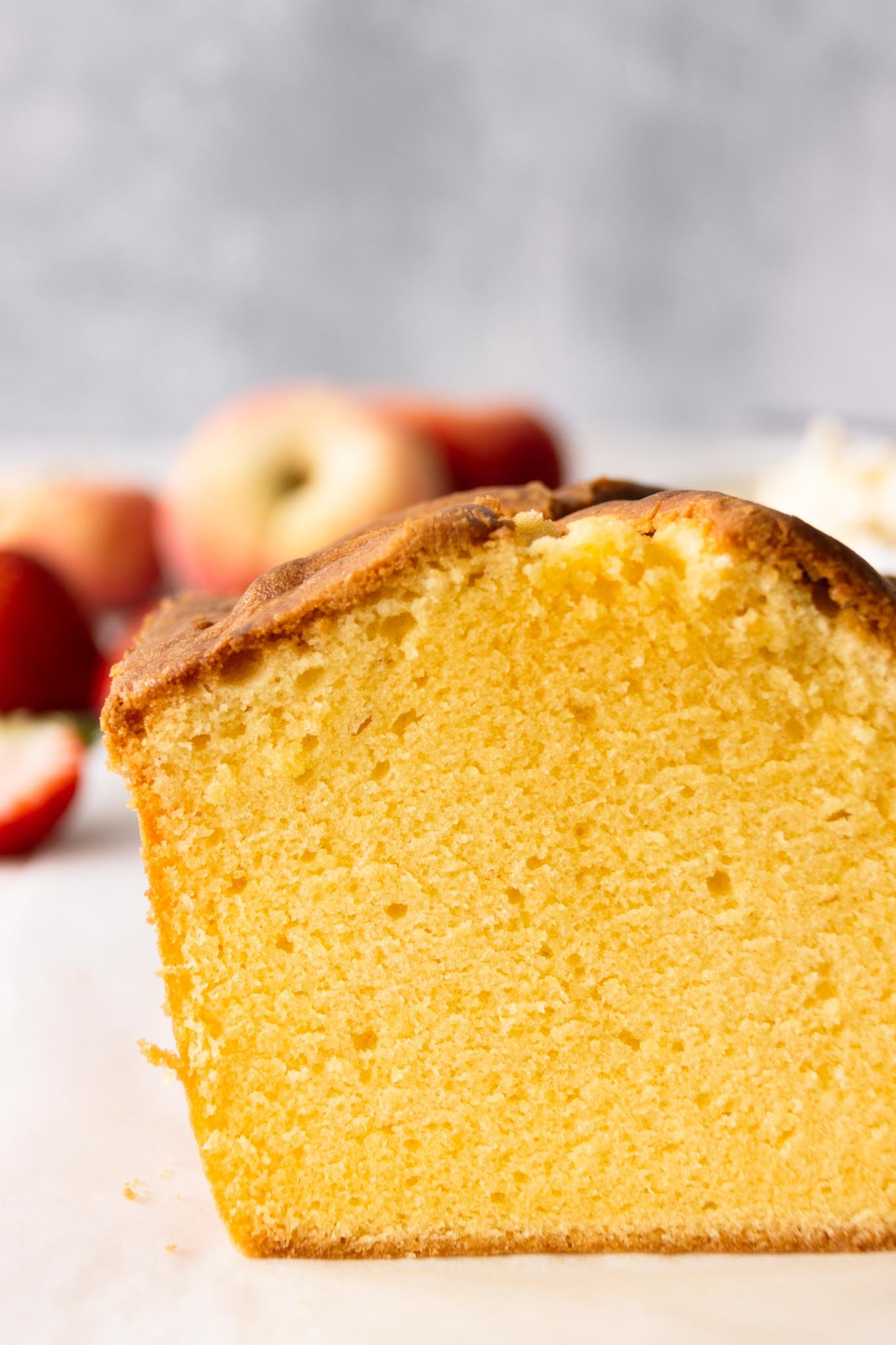
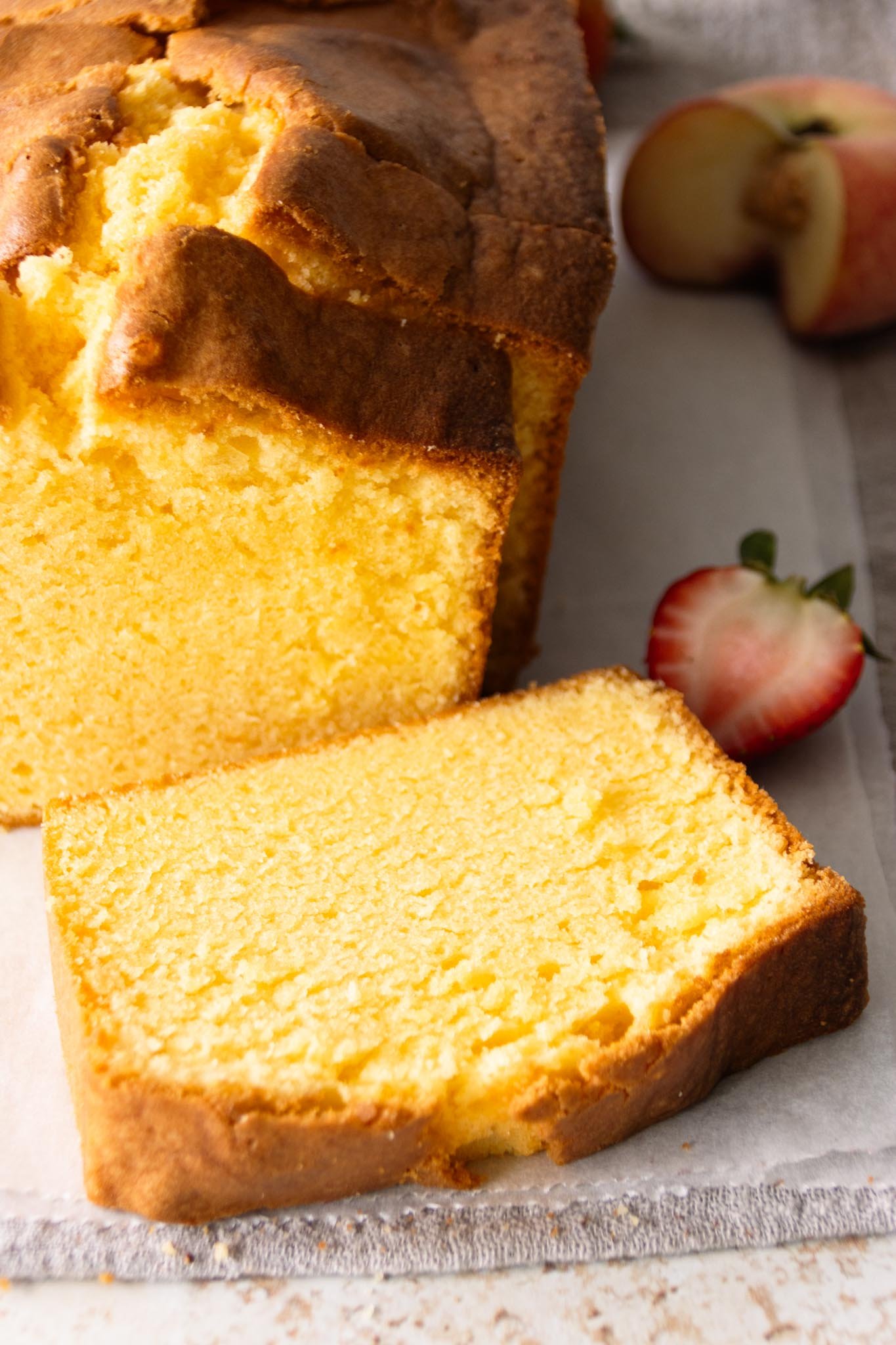
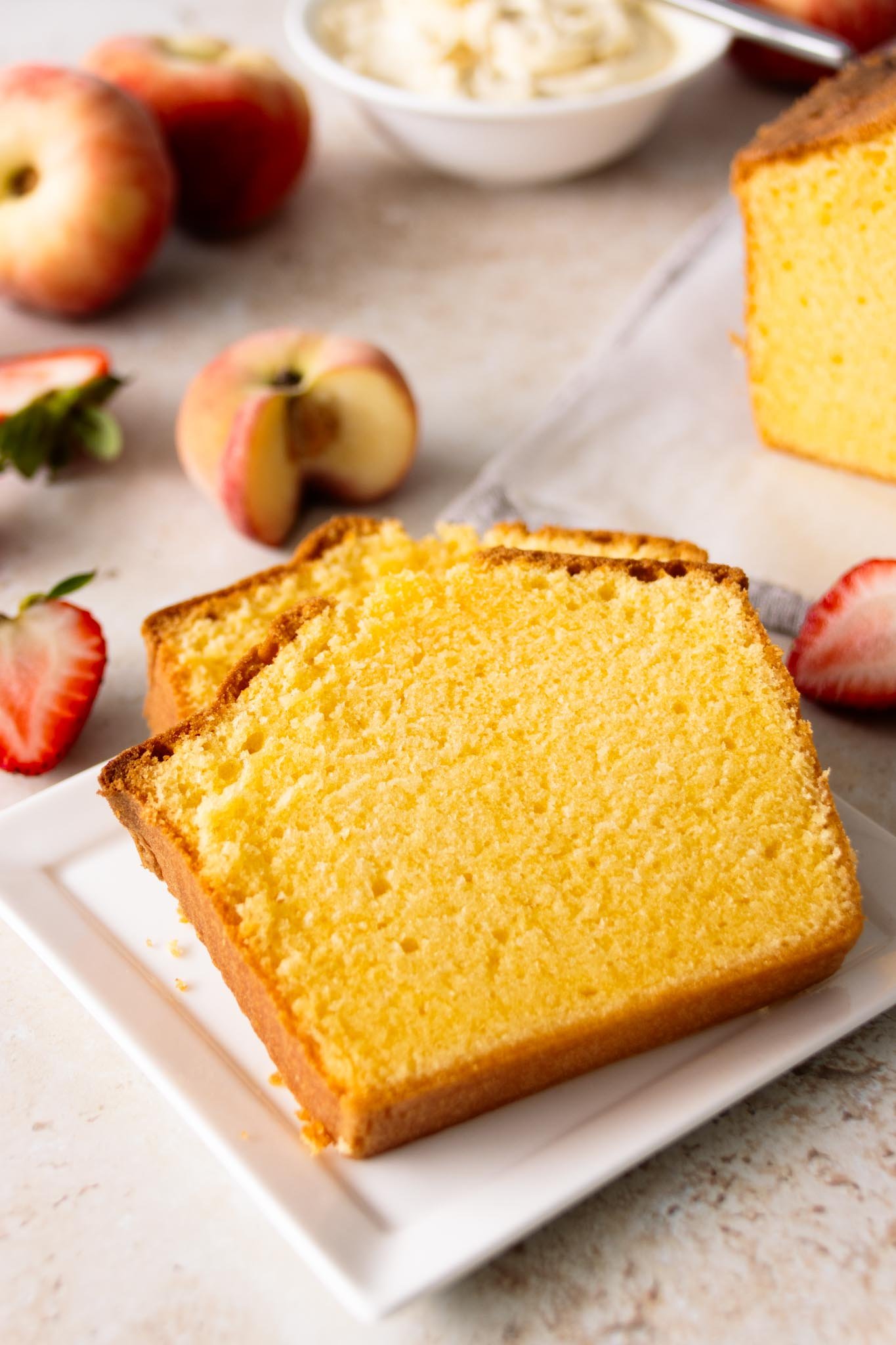
As far as texture goes, this is a very moist cake. It boasts a tightly packed crumb that’s firm, dense, delightfully tender, and velvety smooth—the hallmarks of a perfect pound cake.
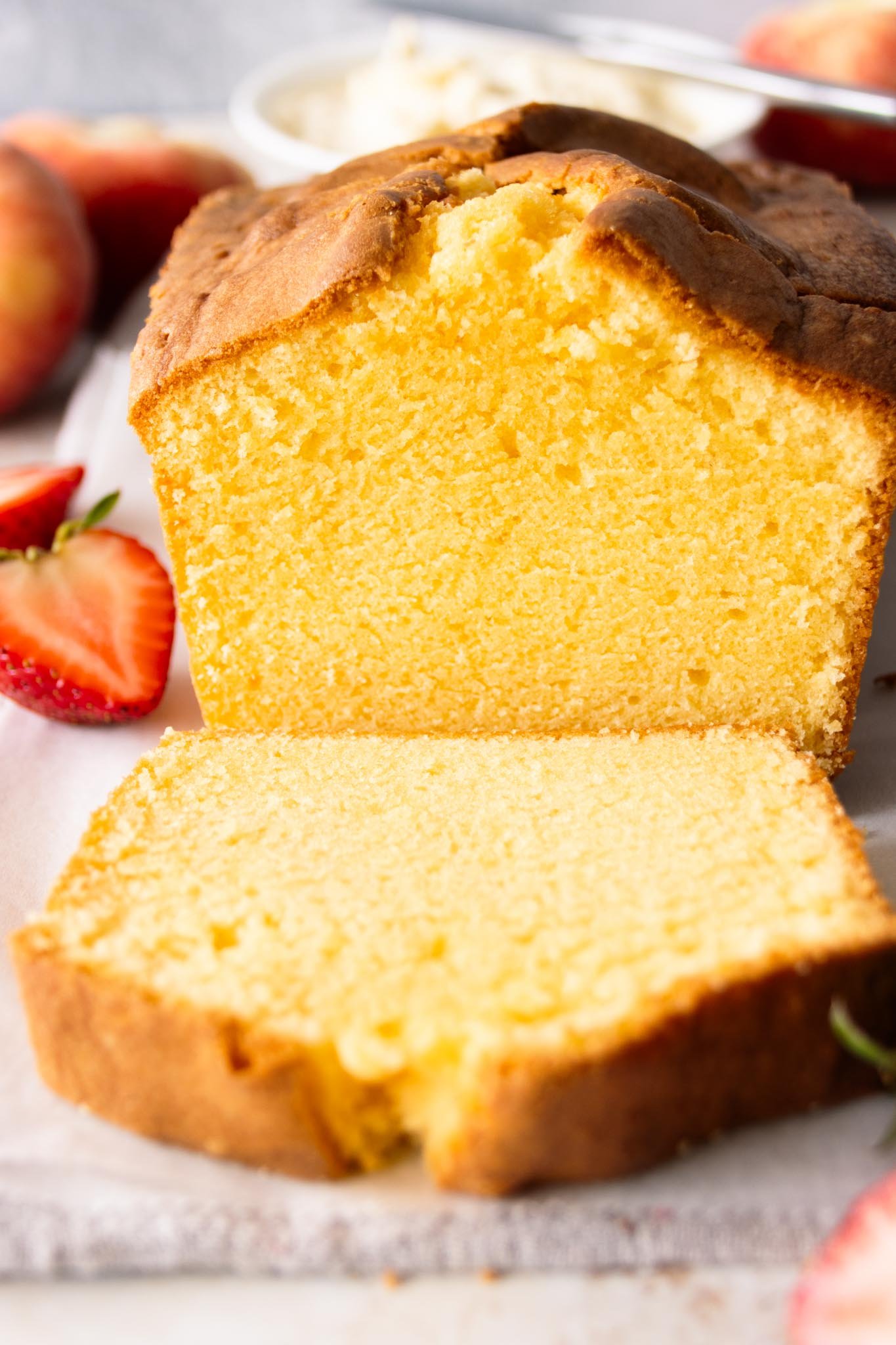
Pound cakes are often the most underrated desserts, but they fill the void perfectly if you’re looking for a no-frills sweet treat.
Not only do I enjoy pound cake plain (coming from someone who grew up on lots of boxed Sara Lee pound cakes😉), but I find it makes the perfect blank canvas to enjoy with powdered sugar, a tangy glaze, or cream cheese frosting.
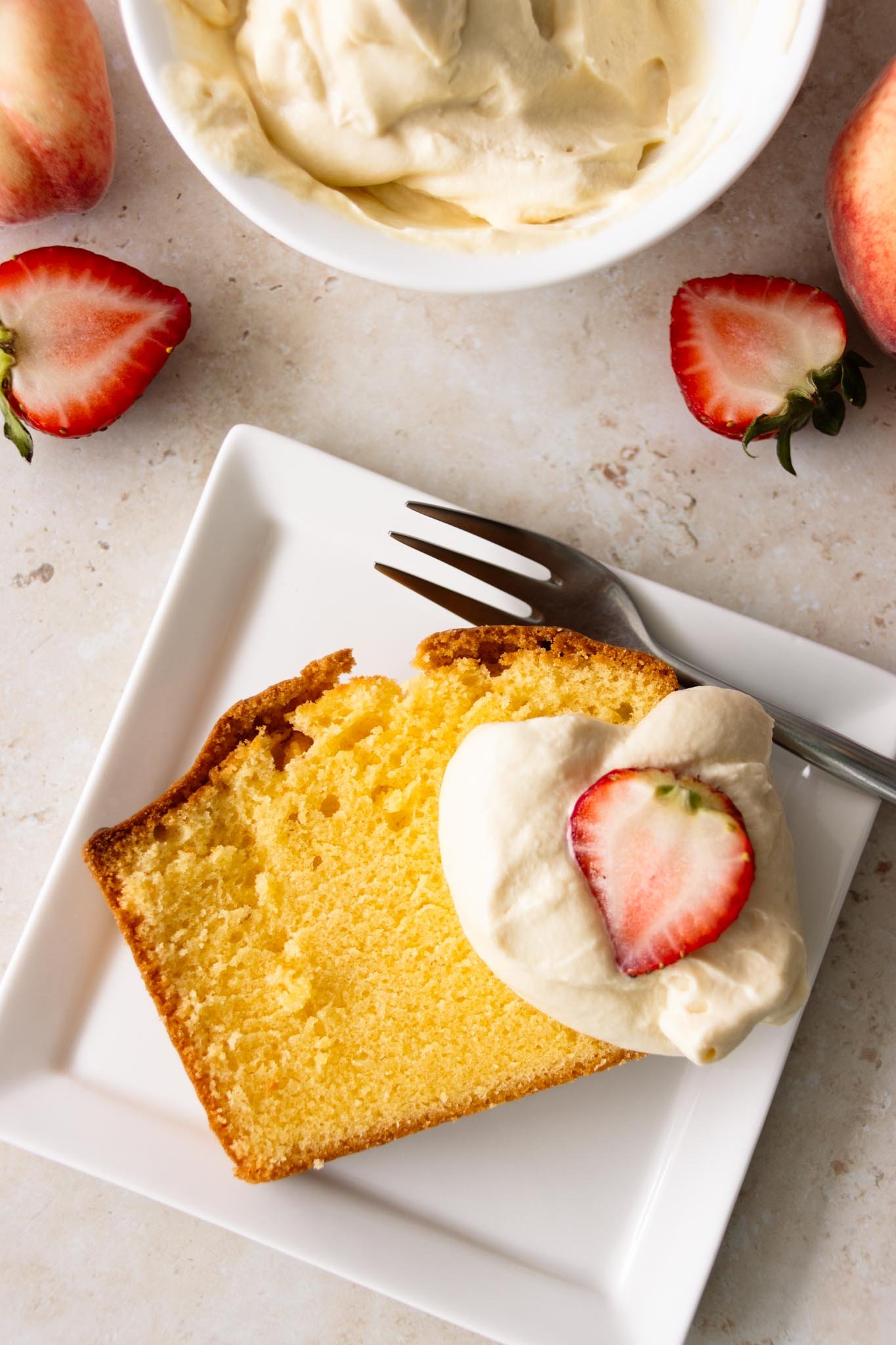
Top a slice with dollops of whipped cream and fresh fruit (fresh berries and peaches are some that come to mind), drizzle with honey, or even lemon curd for a bright and refreshing flavour pairing!
In this post:
- What to expect in this update
- Pro tips on ingredients to make pound cake
- How to tell the butter’s right for creaming
- How to make the best pound cake
- Can I make the pound cake recipe in a bundt pan or a tube pan?
- Troubleshooting tips
- What is a pound cake?
- How to store pound cake
- Does a pound cake freeze well?
What to expect in this update
My regular pound cake recipe up to this point was pretty good, but the recipe was a tad bothersome and often a hit or miss with some readers.
With this update, I’ve given the recipe a major re-work. Also, I’ve simplified the recipe (with step-by-step photos) and included detailed tips and a troubleshooting guide to help overcome commonly experienced pound cake issues (I cover more below).
But most of all, the recipe produces an amazing pound cake that is sure to impress.
Pro tips on ingredients to make pound cake
This is my perfect pound cake recipe because it turns out super moist and flavourful with simple pound cake ingredients – basically, pantry staples like butter, eggs, flour, and sugar.
While ingredients like sour cream, yogurt, buttermilk, and cream cheese or heavy cream have been popularly adapted into many pound cake recipes, I wanted to stay true to the tradition of the classic pound cake. I’m excited to say that this recipe does that!
1. Butter
Butter is the star flavour when it comes to pound cake, so you’ll want to use a good-quality one. I love baking with European and New Zealand-made butters.
Their butters have a high butterfat content (at least 82 – 86%) and a more pronounced, cultured butter flavour.
The butterfat differences might seem insignificant. But when you’re using as much as 2 sticks of butter (half a pound of butter) in this recipe, it could make a world of difference. A richer, creamier, and buttery pound cake, or one that is lighter, less rich, though still delicious.
I like to use unsalted butter and add salt separately, so I have more control over how much salt I’m actually adding to the cake.
Especially when doubling the recipe to fill a 10-cup/12-cup bundt pan or a tube pan, for instance, you should use unsalted butter because salted butter in large quantities could potentially make the cake taste much saltier than it intended.
2. Cake Flour
Cake flour has a lower protein content, which gives this pound cake a more tender crumb. Cake flour is more finely ground than pastry flour and all-purpose flour, which gives this pound cake a luxurious mouth feel.
If you prefer a pound cake with a firmer and denser crumb, swap out the cake flour for pastry flour or all-purpose flour in a 1:1 ratio by weight (not volume).
Do note that pound cakes made with all-purpose flour won’t rise as much as ones made with cake flour, so I would still add the baking powder to add some lift and help open up the crumb a little.
3. Eggs
This recipe uses both whole eggs and extra egg yolks. The extra yolks add both fat (= more moisture), so you won’t need sour cream, heavy cream, or yogurt which are typically used in pound cake recipes for that purpose. Extra egg yolks also contribute to a tastier, creamier, and smoother cake crumb. You’ll need a total of 6 eggs.
Do note that eggs are the only source of liquid in the recipe, so using an incorrect quantity of eggs could throw the recipe out of balance.
I use large eggs, each weighing 56 – 58 grams/2 ounces without shell. Egg size classifications vary among countries or regions, so I recommend using the weight measurements provided in the recipe card.
4. Sugar
Sugar plays an important role during the creaming process. The fine sugar particles cut through the butter, creating pockets of air that create volume and provide lift and leavening for the cake to rise.
Do not be tempted to reduce the amount of sugar – sugar contributes to the moistness of this pound cake. I’m not a fan of overly sweet cakes, so I think you will find that the sweetness of this pound cake is just right.
I use caster sugar, which is slightly finer than granulated sugar and dissolves more easily. Granulated sugar will work just as well. Make sure it’s cane sugar, and not beet sugar or a sugar alternative which can make the final taste and texture a bit wacky.
5. Vanilla extract
A good quality, pure vanilla extract is essential. Vanilla extract enhances a pound cake’s flavour. Its warm and earthy notes complement butter’s rich creamy flavour while masking any eggy-ness. If you use artificial vanilla essence instead of the pure extract, be sure to use double the quantity.
6. Baking powder
Baking powder is not essential as the whipped butter-egg mixture provides sufficient leavening. But adding a leavening agent like baking powder helps to ensure a consistent and even cake rise.
It also acts as a safeguard against an uneven texture or overly dense cake. Plus, if you love that distinctive split on your pound cake, baking powder can help you get that!
7. Salt
Salt greatly improves the flavour of baked goods, and a little goes a long way. It cuts through the sweetness of the sugar and accentuates the flavour of other ingredients.
8. Milk (optional)
I’ve included milk here as an option you can add to the pound cake batter, if it becomes stiff after adding in all the flour mixture (I never had to use it).
A good pound cake batter should be smooth, lump-free, and a ‘spoon-drop’ consistency (it is still a fairly thick batter and won’t be pourable). If the batter is too stiff that you need to use force to scrape down the sides or to scoop it out of the mixing bowl, add 1 to 2 tablespoons of milk (not too much) to thin the batter a little.
A stiff cake batter can happen because we all use flours processed, milled, and stored under varying conditions in different countries. As such, flours can have varying moisture levels, which affect their absorption properties.
It’s been my experience that I often have to add more liquid to this pound cake recipe when I bake in Canada, and much less when I make the same recipe in Singapore.
How to tell the butter’s right for creaming
You’ll often see recipes state to use softened butter or room-temperature butter, but pay special attention. Butter may be much colder or warmer than it looks, depending on how chilly, cool, warm, or hot your kitchen gets.
Butter temperature is crucial (especially if the recipe uses the creaming method) for ensuring your pound cake turns out picture-perfect with an even, uniform, and beautiful golden coloured crumb.
If butter is too warm or soft and greasy, it won’t hold air effectively. Whatever trapped air bubbles will be knocked out as soon as eggs and flour are added, resulting in a dense or gummy crumb.
Here are 2 easy ways to tell when butter is at the ideal creaming temperature:
- Use an instant read kitchen thermometer – leave cold butter at room temperature until it warms to 18-19°C (65-67°F). If the butter is too warm, stick it back in the refrigerator to cool.
- Do a finger test – With your finger, lightly press into the butter. The butter is at the right temperature when it yields to your touch, creating a shallow indentation. There should be some resistance against your finger, but it should not be so soft as to sink in. If the butter leaves your finger with a greasy feel or residue, it is likely too soft or too warm.
How to make the best pound cake
- Prep: Position a baking rack in the middle of the oven and preheat to 175°C(350°F). Grease the base and sides of an 8.5″ x 4.5″ x 2.75″ standard loaf pan (this is my favourite 1-pound loaf pan) and dust with some flour, tapping out the excess. Measure all the ingredients accurately and make sure they are at room temperature (please read my pro tip on butter temperature above before you start).
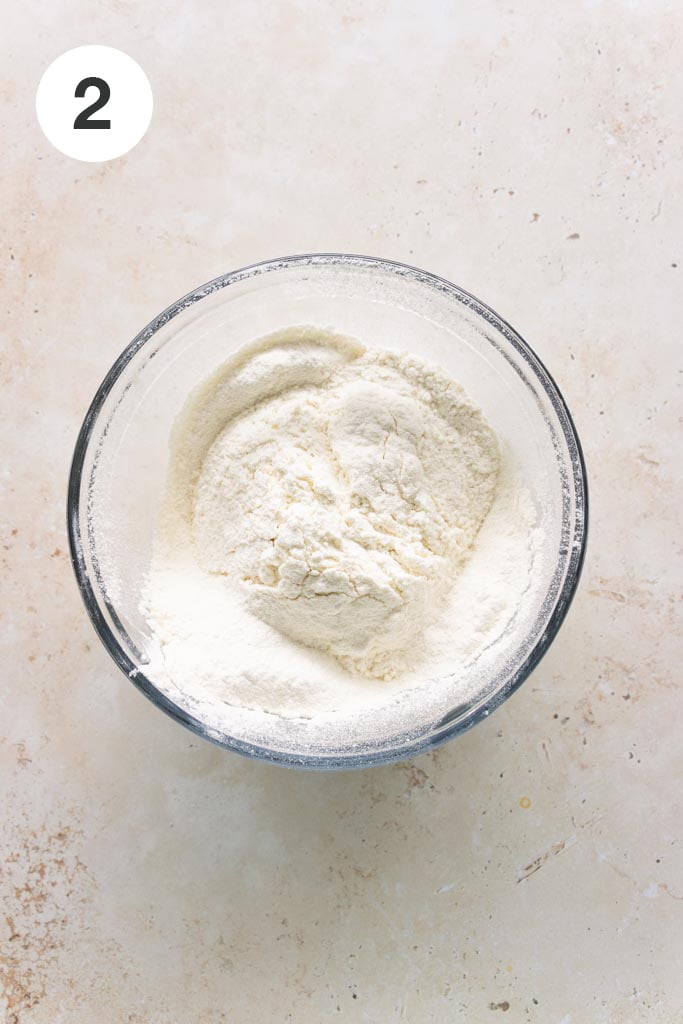
- Dry ingredients (except sugar and salt): In a large bowl, combine cake flour and baking powder. Stir with a balloon whisk and sift the mixture. This helps distribute the baking powder evenly throughout the flour to ensure an even cake rise.
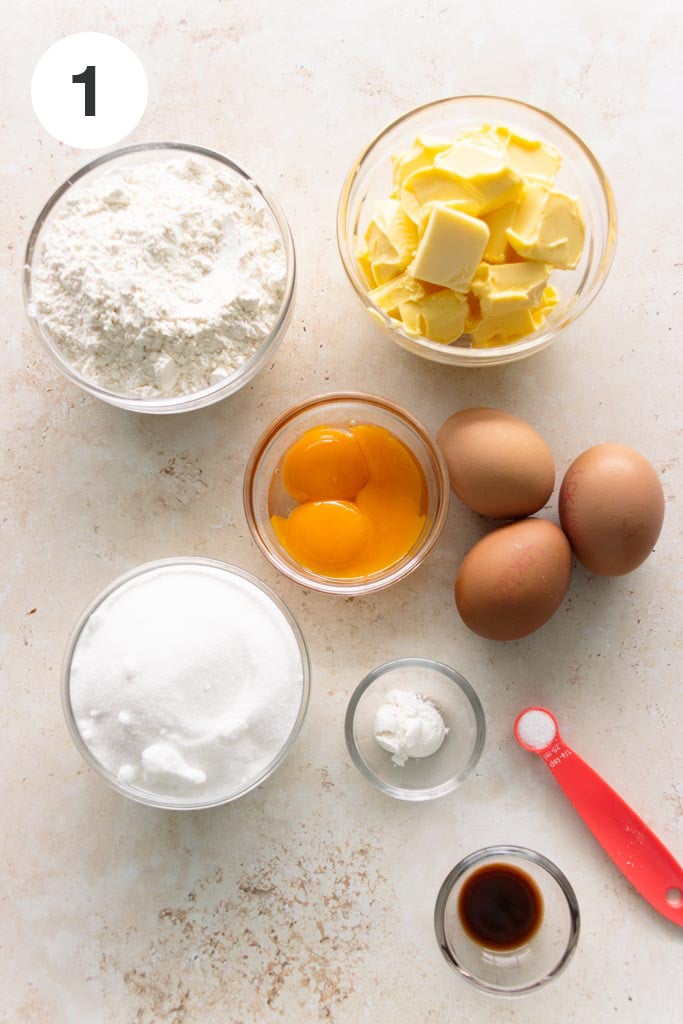
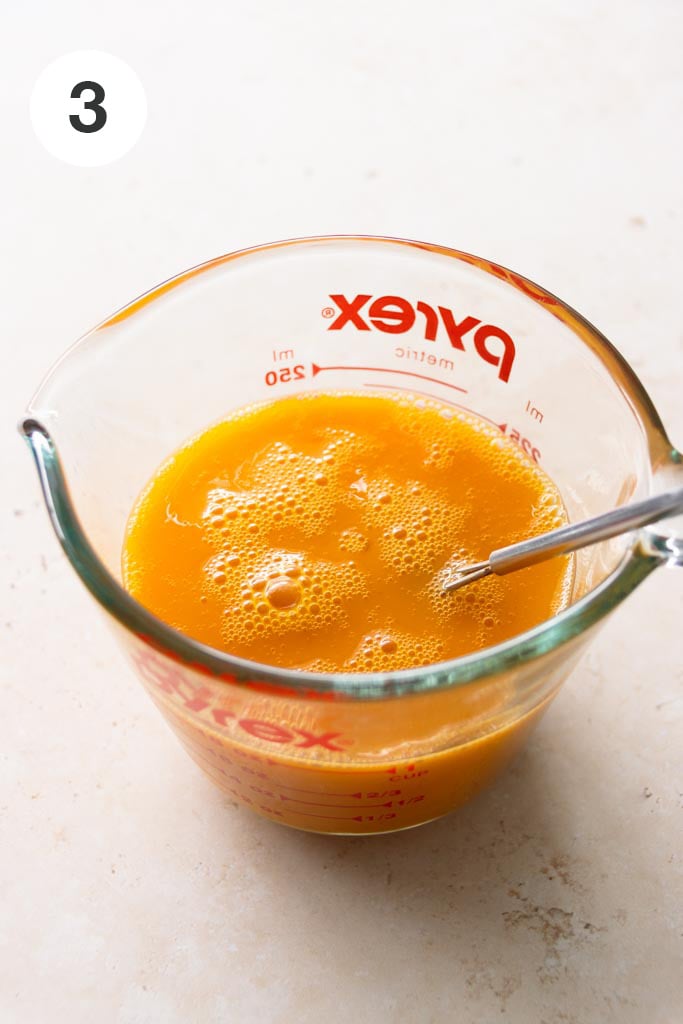
- Wet ingredients: In a medium bowl or measuring cup, combine the eggs, egg yolks, vanilla extract, and salt. Beat with a fork or egg whisk until the mixture is homogeneous.
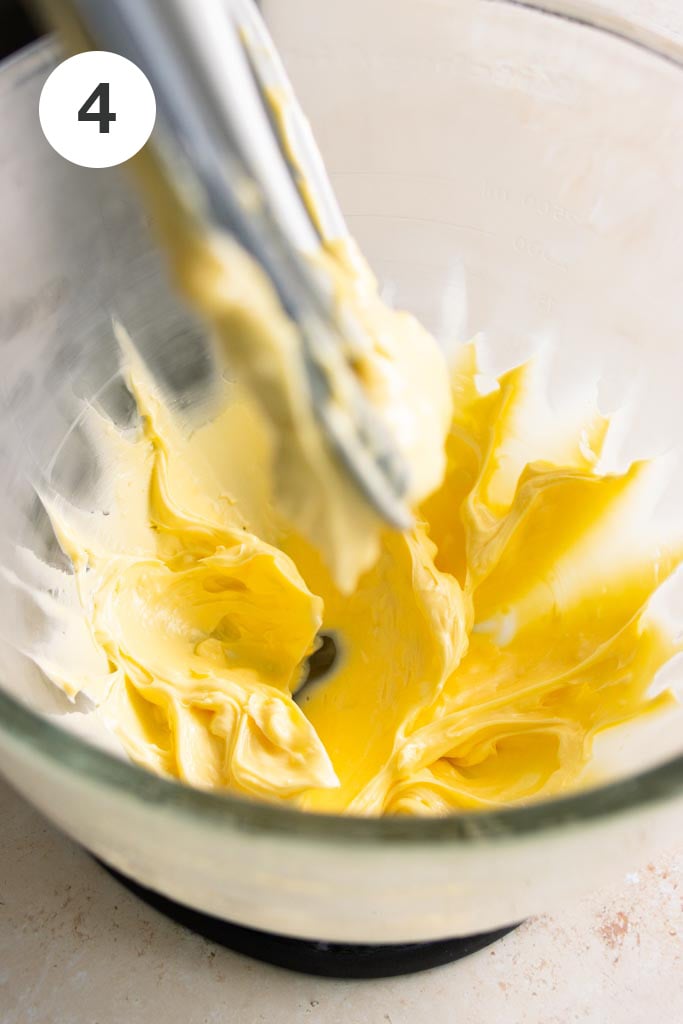
- Cream butter: Place the butter in the bowl of a
stand mixer fitted with a paddle attachment (or into a large mixing bowl if using a handheld electric mixer). Start the mixer at low-medium speed and beat until the butter is smooth, about 30 seconds.
Important tip! Do not cream the butter at high speed. If the butter starts to look soft or greasy at this point, it’s a sign that it has become too warm. Put the entire bowl (with butter) into the refrigerator and chill for 15 to 20 minutes, or until the butter loses the greasy sheen.
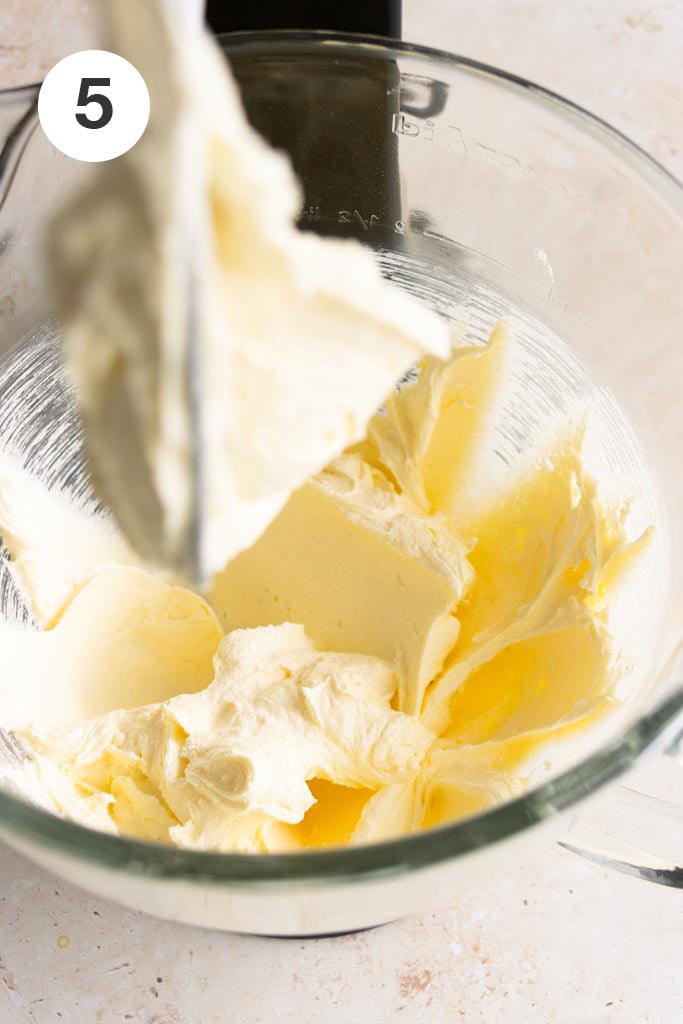
- Add sugar: Do this gradually. I sprinkle in 2 to 3 tablespoons at a time, so it may take up to a full minute to incorporate all the sugar.
Once all the sugar is added, beat for another 1-2 minutes at medium speed, pausing once to scrape down the sides of the bowl. Stop once the butter mixture turns pale, light, and fluffy. Do not over-beat the butter.
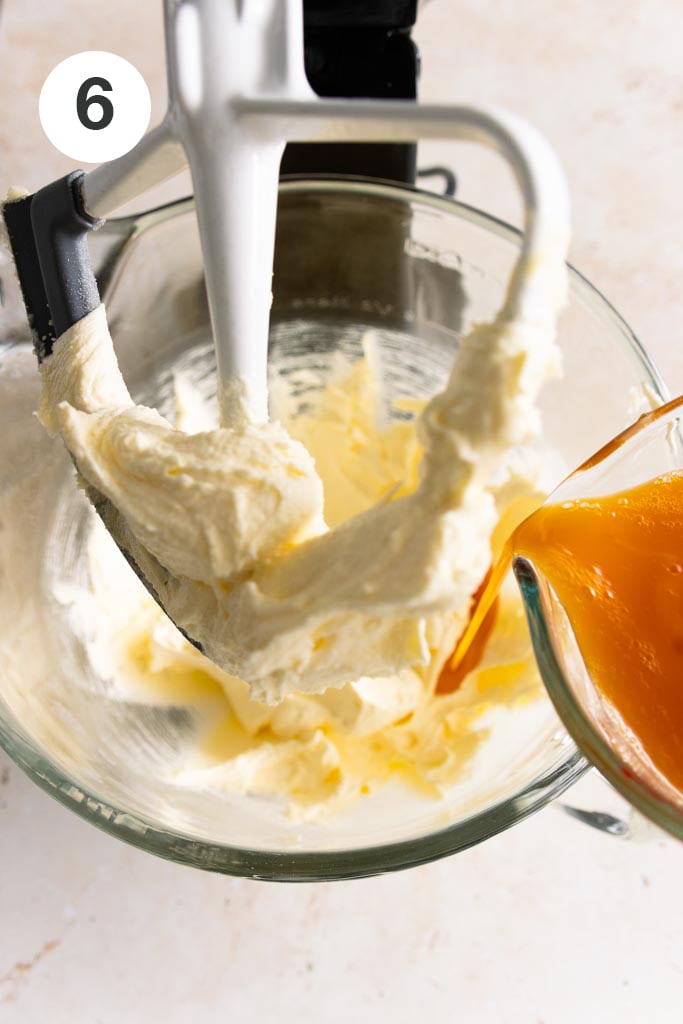
Important tip! To feel how light the butter is, scrape down the sides of the bowl with a rubber spatula – it should feel like buttercream, and most of the sugar should have dissolved. Another way is to rub a bit of the mixture between your fingers – it should feel smooth but not greasy, with very little grit from any undissolved sugar. - Add the wet mixture: Switch the mixer to low speed. Add the egg mixture (2 to 3 tablespoons at a time), beating for 10 to 15 seconds after each addition. Make sure the egg mixture is completely absorbed before adding the next lot.
Once all the egg mixture is added, scrape down the sides of the bowl again. Set the mixer to medium speed, and beat for another full minute.
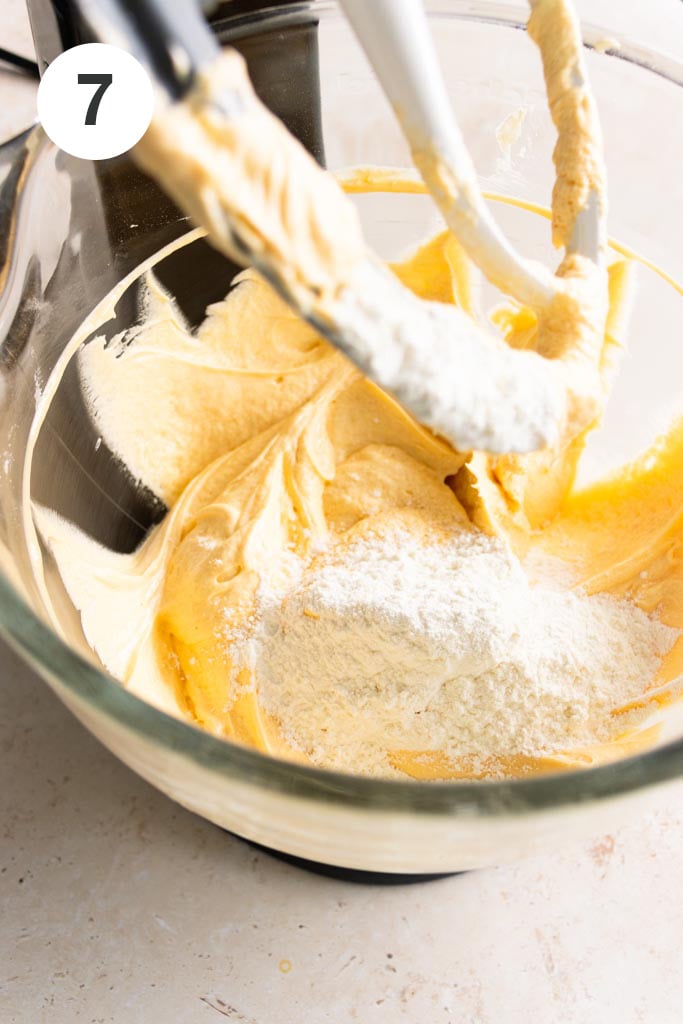
- Fold in the dry mixture: Lastly, add the flour mixture in 3 to 4 lots. Set the mixer speed to the lowest setting (‘Stir’ setting). Turn the mixer paddle on and off in short bursts, no more than a few seconds each time. Stop once the flour disappears into the butter mixture. Repeat with each addition until all the flour has been added.
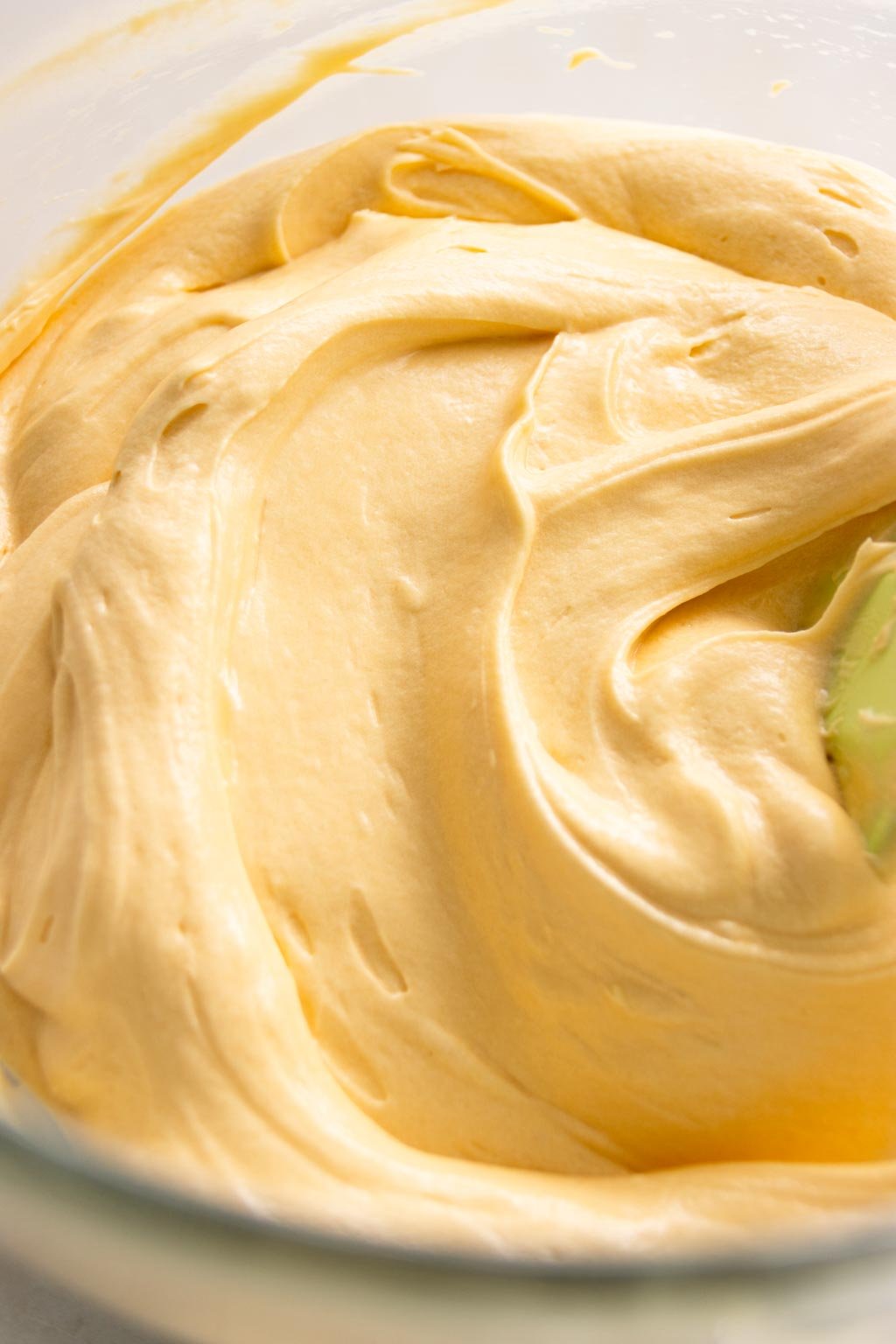
Important tip! A good pound cake batter should be smooth, lump-free, and have a ‘spoon-drop’ consistency (it is still a fairly thick batter and won’t be pourable). If the batter is too stiff, add 1 to 2 tablespoons of milk (not too much) to thin the batter a little. - Using a rubber spatula, give the batter a few final folds by hand to get all of the flour well incorporated. Do not over-beat or over-mix the cake batter.
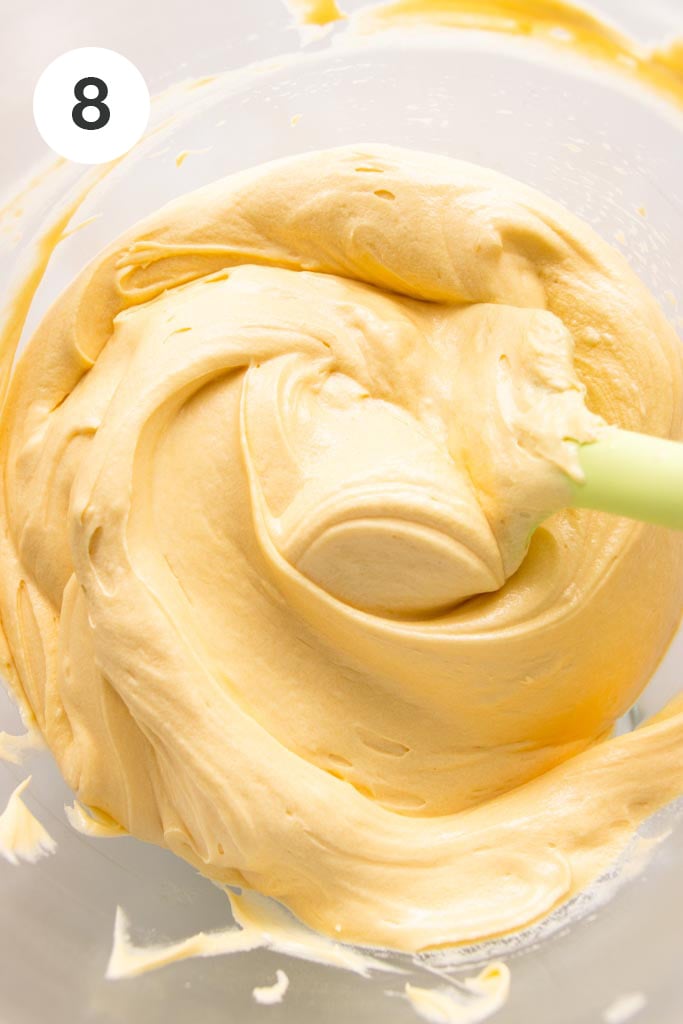
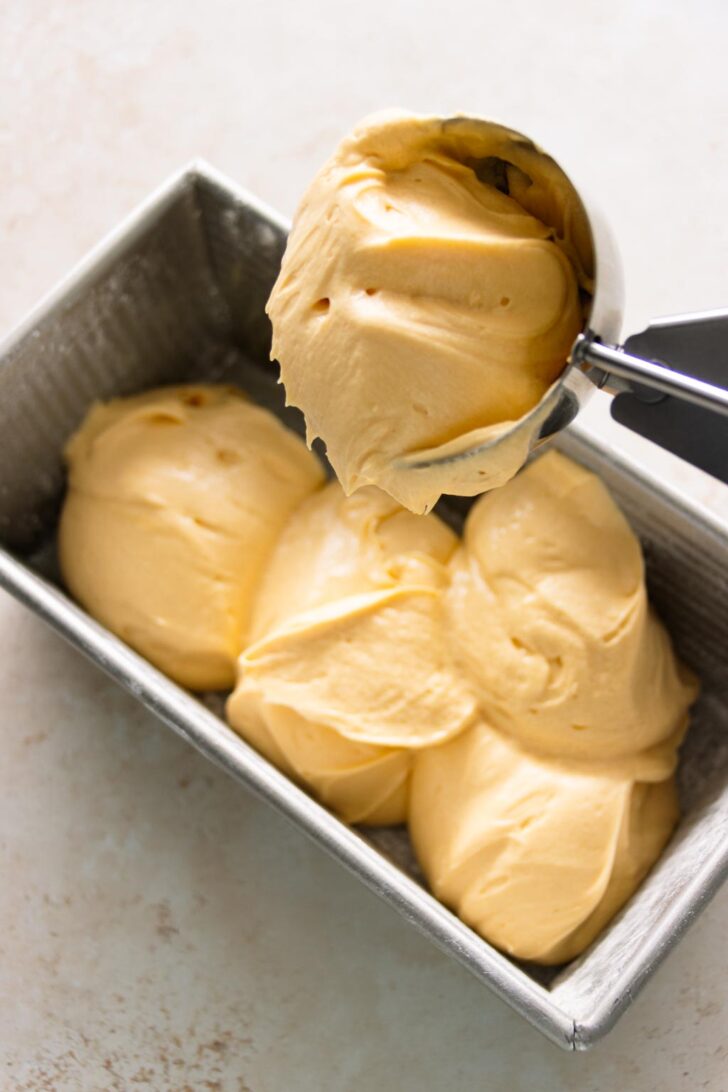
This how the pound cake batter should look like – it should be smooth and have a uniform consistency.
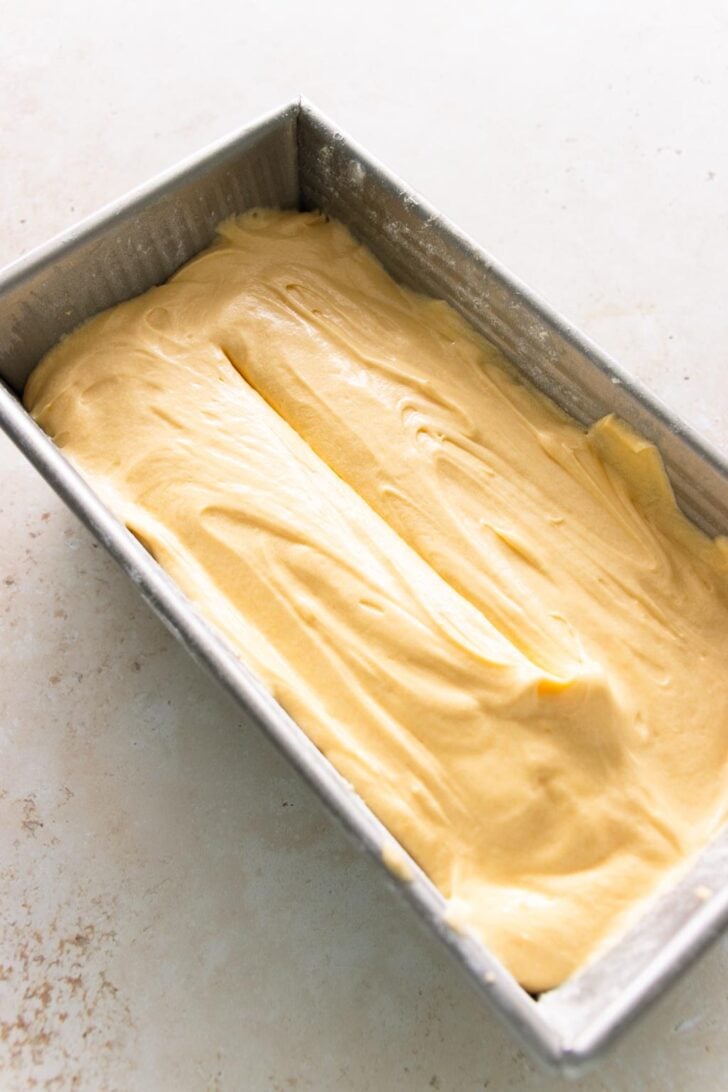
- Fill the pan: Scoop the pound cake batter into the prepared loaf pan (or a cake pan of your choice), level the surface and tap the pan firmly on the countertop to dislodge large air pockets.
Optional: To get a distinctive split on your pound cake, run a sharp knife lengthwise, about 2 cm/1 inch deep, down the centre of the batter in the loaf pan.
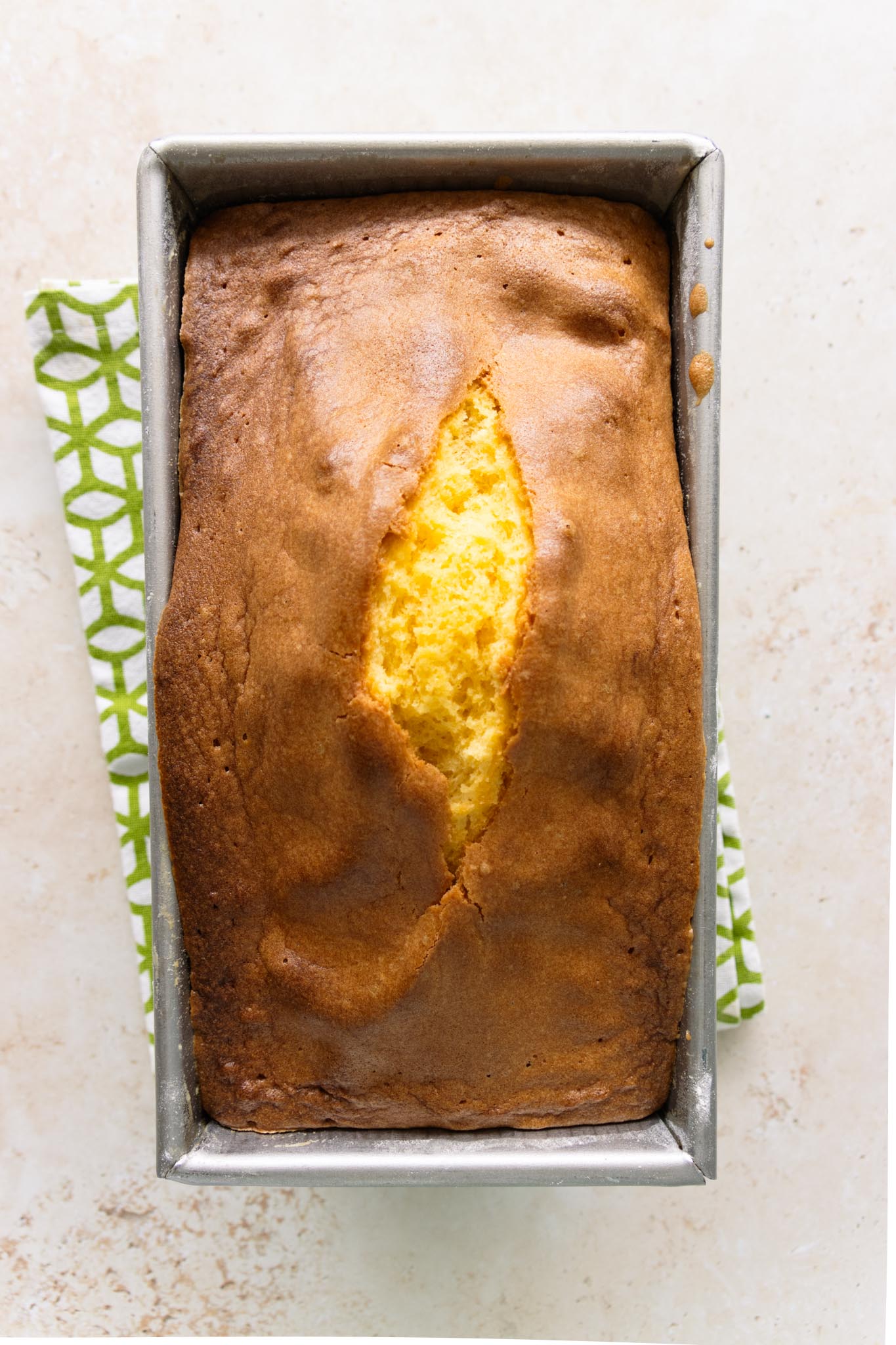
- Bake: Set a kitchen timer for 50 minutes. Bake until the top of the cake rises (the top may split, this is normal) and turns golden brown. To check when the cake is fully cooked, insert a long wooden skewer into the centre of the cake – it should come out clean. Remove from the oven and let the cake cool in the pan for 10 minutes before releasing onto a wire rack.
Important tip! If the top starts to brown deeply towards the end of the baking time, tent the cake with aluminum foil.
Save for Later:Perfect Pound Cake {Extra Moist!}
Pin this on PinterestCan I make the pound cake recipe in a bundt pan or a tube pan?
Yes, my perfect pound cake recipe bakes up beautifully in a bundt pan, tube pan, or regular cake pan. The full recipe makes enough batter for a 6-cup bundt pan.
Double the recipe (toggle on the 2x button in the recipe card below) to make enough batter for a 10-cup/12-cup bundt pan, a 9″ x 3″ (23 x 9 cm) tube pan, a 9″ x 3″ (23 x 8 cm) springform pan, or a 10″ x 2″ (25 x 5 cm) round pan.
Troubleshooting tips
As with most cake recipes, there may not be a single root cause but sometimes, a combination of factors that can cause your pound cake to bake up improperly.
Too much flour. Measure the flour correctly, especially when using measuring cups. Excess flour absorbs too much moisture from the other ingredients, leading to a tough and dry crumb.
Too long baking time, which can dry out the cake. To avoid this, check the cake for doneness 5 minutes before the end of the stated baking time. If the cake isn’t quite done by then, continue baking, checking at 5-minute intervals.
Too high oven temperature. Ovens can vary quite a bit and tend to run too hot or a little cool. For best results, use an oven thermometer to check the internal temperature of your oven.
Pound cake is traditionally heavier and denser than a yellow cake or vanilla cake. However, an unusually heavy or dense cake can be because of using too much flour, over-creaming the butter, over-mixing the batter after adding the flour, or insufficient leavening.
Measure the flour correctly – a digital kitchen scale works wonders! Start with butter at the ideal creaming temperature – butter that’s too soft or greasy cannot effectively trap air bubbles, resulting in a dense crumb.
Avoid over-creaming the butter – beat at a low to medium speed. Avoid over-mixing the flour – mix at low speed in short bursts, or by hand.
Check the efficacy of the leavening agent – an expired baking powder prevents the cake from rising properly.
The bane of pound cakes, gummy streaks look like dense, moist, sodden patches or lines that look doughy and underbaked but are fully cooked. Commonly, this is due to over-creaming the butter, over-beating the eggs, or over-mixing the batter after adding the flour.
Remember – cream the butter, sugar, and eggs at a low-medium speed and even lower (literally the lowest speed setting) to incorporate the flour.
A pound cake sinking or collapsing could be due to under-baking, baking at too low a temperature, over-creaming the butter and sugar, or too much or too little leavening.
Preheat the oven ahead of time. This allows you to put the pan into the oven as soon as you finish making the cake batter. The last thing you want is a cake batter sitting losing precious trapped air bubbles (and volume) as it sits.
Check the center of the cake for doneness with a cake tester – extend the baking time if necessary, checking every 5 minutes until the cake is fully cooked. The stated baking times are guidelines, but can vary among domestic ovens.
Avoid over-creaming the butter – do not beat the butter and sugar mixture for too long a duration, or at high speed.
What is a pound cake?
The original pound cake recipes first appeared in English and American cookbooks in the 18th century. Back then, it was called a pound cake because it was made with a pound of flour, a pound of butter, a pound of sugar, and a pound of eggs.
The pound cake first appeared in the U.S. cookbook, American Cookery, published in 1796. By most accounts, this traditional pound cake recipe was the source and inspiration for the American butter cake.
Over time, the modest pound cake has evolved, as have the ingredients. Home bakers today incorporate ingredients that affect the pound cake’s texture and flavour. Some of the most popular variations include lemon pound cake, cream cheese pound cake, and sour cream pound cake.
How to store pound cake
Allow the pound cake to cool completely before storing. Keep the pound cake in an airtight container with a good seal. At room temperature, pound cake can keep well for the first 3 days. If you have leftovers beyond this time, it’s best to keep any remaining cake or slices in the refrigerator and consume within 3 days.
Does a pound cake freeze well?
Pound cakes freeze extremely well. To retain maximum freshness and flavour, freeze the pound cake immediately once it has cooled to room temperature. Wrap the whole pound cake (or individual slices) tightly in plastic wrap, followed by a sheet of aluminum foil. Put into a freezer bag or a freezer-safe container.
Store in the freezer for up to a month. When ready to thaw, place the wrapped cake in the refrigerator overnight or for several hours, or thaw it at room temperature, still wrapped.
I hope this has been a helpful post with all the information and tips to help you nail the perfect pound cake, especially if it’s your first time. Do let me know how you got on with the recipe, I’d love to know!
Here are more awesome buttery treats to inspire your next bake:
- Apple Cake with Brown Sugar Cinnamon Streusel Topping
- Banana Spice Cake – Best Spiced and Buttery Banana Flavour
- Scones – Buttery, Flaky, Crumbly Goodness
- Sugee Cookies – Makes Melt-in-Your-Mouth Magic!
- Soft & Chewy Chocolate Chip and Nut Cookies
Tried this recipe? I’d love to see! Remember to share your pics on Instagram and tag @foodelicacy or #foodelicacy.
Perfect Pound Cake {Extra Moist!}
Ingredients
- 227 g unsalted butter at room temperature, cut into 2 cm/1" cubes
- 225 g sugar
- 188 g cake flour (see Note1)
- 3 large eggs (each weighing 56-58 grams/2 ounces without shell)
- 3 egg yolks from large eggs
- 1 tsp vanilla extract
- ¼ tsp salt
- 1 tsp baking powder
- 1-2 tbsp milk (optional, only as needed)
Instructions
- Prep: Position a baking rack in the middle of the oven and preheat to 175°C(350°F). Grease the base and sides of an 8.5" x 4.5" x 2.75" standard loaf pan and dust with some flour, tapping out the excess.
- Dry ingredients (except sugar and salt): In a large bowl, combine cake flour and baking powder. Stir with a balloon whisk and sift the mixture.
- Wet ingredients: In a medium bowl or measuring cup, combine the eggs, egg yolks, vanilla extract, and salt. Beat with a fork or egg whisk until the mixture is homogeneous.
- Cream butter: Place the butter in the bowl of a stand mixer fitted with a paddle attachment (or into a large mixing bowl if using a handheld electric mixer). Start the mixer at low-medium speed and paddle the butter until smooth, about 30 seconds.Important tip! Do not cream the butter at high speed. If the butter starts to look soft or greasy at this point, it's a sign that it's too warm. Put the entire bowl (with butter) into the refrigerator and chill for 15 to 20 minutes, or until the butter loses the greasy sheen.
- Add sugar: Beat in the sugar gradually. I sprinkle in 2 to 3 tablespoons at a time (it may take up to a full minute to incorporate all the sugar).
- Once all the sugar is added, cream the butter mixture for another 1-2 minutes at medium speed, pausing once to scrape down the sides of the bowl. Stop once the butter mixture turns pale, light, and fluffy. Do not over-beat the butter.Important tip! To feel how light the butter is, scrape down the sides of the bowl with a rubber spatula – it should feel like buttercream, and most of the sugar should have dissolved. Rub a bit of the mixture between your fingers – it should feel smooth but not greasy, with very little grit from any undissolved sugar.
- Add the wet mixture: Switch to low speed. Add the egg mixture gradually (2 to 3 tablespoons at a time), beating for 10 to 15 seconds after each addition. Make sure the egg mixture is completely absorbed before adding the next lot. Once all the egg mixture is added, scrape down the sides of the bowl again. Set the mixer to medium speed, and beat for another full minute.
- Fold in the dry mixture: Lastly, add the flour mixture in 3 to 4 lots. Set the mixer speed to the lowest setting ('Stir' setting). Turn the mixer paddle on and off in short bursts, no more than a few seconds each time. Stop once the flour disappears into the butter mixture. Repeat with each addition until all the flour is added. With a rubber spatula, give the batter a few final folds to get all of the flour well incorporated. Do not over-beat or over-mix the cake batter. Important tip! A good pound cake batter should be smooth, lump-free, and have a ‘spoon-drop’ consistency (it is still a fairly thick batter and won’t be pourable). If the batter is too stiff, add 1 to 2 tablespoons of milk (not too much) to thin the batter a little.
- Fill the pan: Scoop the cake batter into the prepared pan. Level the surface and tap the pan firmly on the countertop to dislodge large air pockets.Optional: To get a distinctive split on your pound cake, run a sharp knife lengthwise, about 2 cm/1 inch deep, down the centre of the batter in the loaf pan.
- Bake: Set the timer for 50 minutes. Bake until the top of the cake rises (the top may split, this is normal) and turns golden brown. Test for doneness with a long wooden or metal skewer inserted into the centre of the cake. The cake is fully cooked when the skewer comes out clean. Remove from the oven and let the cake cool in the pan for 10 minutes before releasing onto a wire rack.Important tip: If the top starts to brown deeply towards the end of the baking time, tent the cake with aluminum foil.


I tried this recipe, it was fabulous! As a newbie baker, I found the instructions easy to follow and the cake turned out perfect indeed! True to your pictures, I am serious! Thank you Celia!
“Best cake you ever made!” says husband
“Very satisfying!” says son. How right! 1 slice is satifies the craving.
Love it!
Thanks for sharing the recipe. It turned out very well even though I struggled. Its a first time for me to beat the ingredients in 3 separate bowls and then combining them. Plus I didnt have luxury of 3 bowls.
I’m so thrilled this worked out so well for you, Mary! Thank you so much for sharing.
HI Celia
I was searching for a simple gula melaka cake and i came upon your comments of substituting 60% of the sugar and it turns out good.
Thank you for sharing. Meanwhile, stay safe and stay healthy ! ?
Hi Cecilia, thank you for sharing! I’m happy it worked out well! I will try that myself … gula melaka pound cake sounds delicious! Stay safe and healthy too!?
Hi Celia, I was so happy to have found this POUND cake recipe! This period in SG just gets us trying more kitchen recipes. If I would want to incorporate Gula Melaka, can you advise how I can add it?
Hi Cyn, thank you for writing in! I haven’t tried this recipe with gula melaka, but I would do it this way if did ?. Substitute 60% of the white sugar with gula melaka, so you have a mixture of both sugars. Finely grate the gula melaka first, then beat together with yolks and white sugar as per the recipe instructions. I hope you can share if this works out well!
Thank you for the recipe. I love Sara Lee cake too! Absolutely delish. Can i omit almond essence?
Hi Nor, ha ha.. glad to know a Sara Lee cake lover too!?? yes, you can omit the almond essence or even try another!