

English Cottage Bread
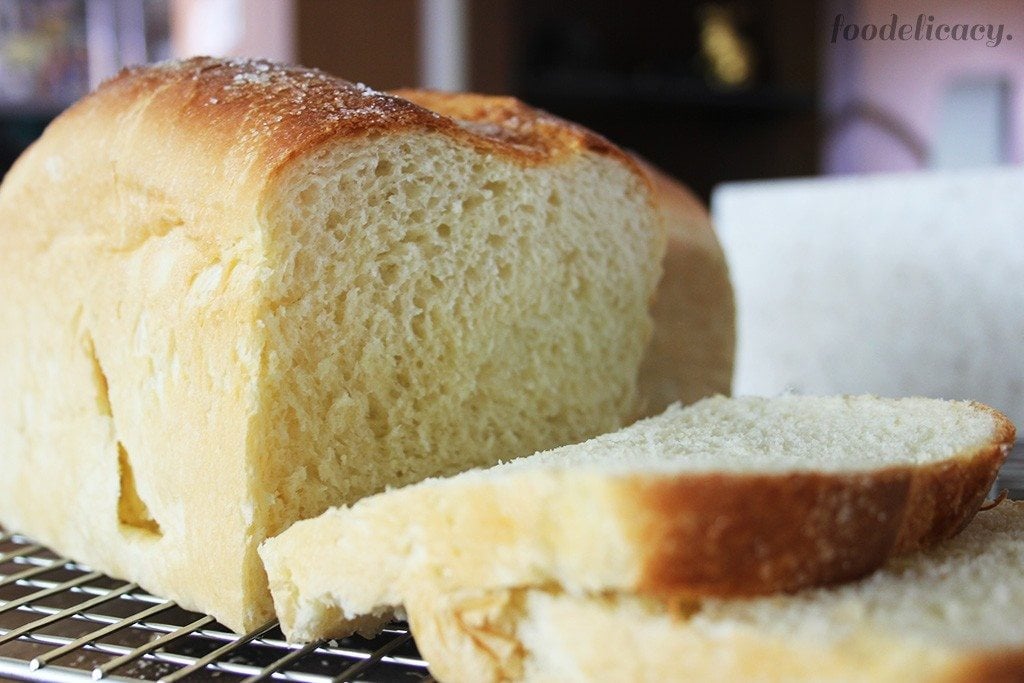
This English cottage bread is very flavourful, soft and fluffy, and beats store-bought breads anytime. It’s perfect for all your sandwiches and great for bread and butter puddings too. Nothing goes to waste!
I thought this English cottage bread would make for a nice departure from my posts the past couple of weeks on festive treats. Goodness knows, I’ve had more than my fair share of Chinese New Year feasting on cakes and cookies and a waistline to show for it.

Maybe it’s also because I feel just a tad healthier (read: less guilty) when looking at much more wholesome foods like cottage bread.
After all, it isn’t loaded as much with fat, grease or sugar, which I have to admit, is a desperately needed respite from cakes, pastries and fried finger foods.


Hence, this is a really great back-to-basics food staple – the humble bread loaf.
I don’t know about you, but whenever I see a fresh loaf of bread, butter kaya toasts, or egg-dipped, cinnamon-infused French toast generously drizzled with maple syrup fill my mind to no end!
Or just making simple toasted ham and cheese and club sandwiches for a lunch eat-in. Filled with healthy, nutritious fillings, cottage bread makes delicious school lunches for kids.
Even better, slices of English cottage bread make for a delicious bread pudding, if you haven’t yet tried it.
Check out my recipe articles on Welsh Bara Brith (a fruit-filled bread loaf) and Kugelhopf.

I’ve made this English cottage bread on many occasions, and this recipe is a keeper!
The bread is very flavourful, soft and fluffy, and beats most store-bought breads, thumbs down. Yet, for all it’s softness, it’s surprisingly sturdy, and can sandwich pretty hefty fillings too.
If you have an electric mixer with a dough hook attachment, making this is almost effortless.
But best of all, I’ve found that nothing can quite surpass the wonderful, heady aroma of freshly baked bread wafting through your home. Don’t wait, do try it!
English Cottage Bread
Ingredients
- 400 g bread flour
- 100 g plain flour
- 45 g caster sugar
- 10 g salt
- 20 g milk powder
- 3 ½ tsp instant yeast
- 1 egg
- 260 ml cold water
- 60 g butter
For the Topping (Optional):
- 6 tbsp butter
- 3 tbsp sugar
Instructions
- Mix all the dry ingredients (flours, sugar, salt, milk powder, and yeast) together in a a mixer bowl. Add the egg and cold water. Using an electric mixer fitted with a dough hook attachment, knead to form a dough.
- Add butter, and knead until dough becomes soft and elastic. Set dough aside to ferment for 60 minutes.
- Divide the dough into 2 equal portions. Shape each portion into a ball. Set aside for another 10 minutes to rest.
- Using your fingers, flatten each into a rectangle, making the short side about the same length as the bread tin. Roll up each like a log or Swiss roll.
- Grease two (2) bread or loaf tins (length 20 cm x width 11 cm x height 11 cm). Put one rolled dough in each tin. Set aside to proof for 45 minutes, or until dough has doubled in size.
- Using a sharp knife, score a line once lengthwise and slightly off centre, across the top of each loaf. Drop the butter, and sprinkle the sugar, equally between the 2 loaves, into the slits and on the tops.
- Bake at 180 deg C for 30 minutes. Remove the loaves from the tins immediately, and set aside to cool completely on a cooling rack. Slice and serve as desired.


I just tried this recipe, but instead of making it into a loaf, I made buns. They’re perfect! Exactly the kind of bread i’ve been looking for. Thank you so much!
Can you substitute a portion of the white flour for whole wheat ?
Hi Debra, I haven’t made the same recipe with part whole wheat flour so I can’t say for sure. However, substituting with part whole wheat flour would require more liquid, so the ratios would be out of balance. If not adjusted for, you may end up with a drier and tougher bread loaf.
Came out perfectly! This is my new go to for white breads and rolls.
I’ve now been baking bread for a few years with sourdough being our favorite. At least until now, this recipe makes the most delicious yeast bread I’ve made. My family loves it and now we try to keep on hand all the time. Thank you for the lovely recipe and your willingness to share it!
My loaf pan is large so I made only one loaf. It was delicious!!my family loved it and sure to become a staple in our family. Thank you for the recipe.
First time making this.
Could you put the conversions in.
Hi Karen, I’ve worked out the conversions in the recipe card. Please note that the amounts worked out are based on standard measuring cups for dry ingredients and liquid measuring cups for wet ingredients. When measuring flour, I highly recommend using the ‘fluff, sprinkle and scrape’ method to make sure you don’t end up with too much flour.
This looks great!
Can you substitute oil for the butter?
Hi Sasha, I usually replace oil for butter 1:1 for cakes with success, but I haven’t personally used oil in place of butter for this bread recipe. By most accounts I searched online, it should work out well too for bread recipes with suggestions to replace 1:1 or a leaner ratio of 3/4:1 (3/4 part oil to replace 1 part butter). Hope this helps!
I have been making different recipes of sandwich bread trying to find one with flavor. This is THE ONE! The search is over. I love that it’s a more enriched bread using ingredients to give it a depth of flavor that we were missing from the other breads. Of course I skip the sugar topping at the end. This bread is delicious!
I would love to try this recipe but one thing makes me leery, does it really take cold water? How does the yeast get activated?
Hi Brenda, thanks for asking! In short, yes! In cold water, the yeast still produces carbon dioxide gas but at a much slower rate. Because the yeast works slowly in a cool dough, it has more time to develop flavour. Think of it as similar to how you would chill unbaked bread dough overnight for better flavour. This would affect the 1st rise (hence, as long as 60 minutes compared to 40/45 minutes). Hope this helps!
Fabulous soft bread. I made it as written, except I did use a bit less salt and sugar. Personal taste.
If you or yours are fans of soft bread try this recipe. Thanks Celia!
Thank you so much for the feedback, Marsha! Appreciate the 5-star review!
Hi Celia. I recalled you published a pizza dough recipe. It is no longer in your website. Wud u be so kind to share again pls. Tk u so much
Hi Doris, I’m sorry but that recipe may no longer be available as it was part of a larger number of posts that I removed as part of an SEO (Search Engine Optimization) exercise I did a while back. Basically, those posts that receive little to no traffic or lacked traction were deleted to streamline the overall website content.
Hi I was just wondering if this bread can go in the freezer because it’s just my husband and myself left at home so one loaf would be enough but I would like to bake this bread and thank you for sharing your recipes 😋😋
Hi Sheila, yes, you can freeze this bread. I would wrap and seal tightly in a few layers of plastic wrap, and then into a freezer bag to prevent any risk of freezer burn.
Would this recipe work in a breadmachine??
Hi Donna, I’ve never tried this in a bread machine as I don’t own one, so I can’t say with certainty. I found this great article by King Arthur Baking which might be useful, not specifically for this bread recipe, but for converting bread recipes to a bread machine in general. Hope it helps answer some of the questions you may have.
Hi there, the recipe doesn’t say what you do with the 60g of butter, I’m assuming you melt it and add it in the mix? Also, can a food processor be used to knead the dough in this case? Thanks!
Hi Alena, thank you for writing in! You add the 60 g in step (2), as stated in the recipe instructions – room temperature butter will do. I haven’t tried kneading in a food processor, so I can’t say for sure how the dough might turn out.
Hi Celia! If I were to make like asian bakery style bread loaf is it similar to this recipe?
Hi Umairah, I’m not sure which kind of Asian syle loaf breads you like, but this loaf turns out moist and tender too, like some kinds you find in Asian bakeries. It is moist and tender, has a delicious flavour, so it is great for eating with your favourite spreads (butter sugar, peanut butter, jam, etc.), and also for sandwiches. I feel it will be definitely worth a try!
Would love to try this but I get so confused trying to convert fr metric. This looks like the bread recipe I have been looking for, soft and slightly sweet. Would you know the conversion? You have a beautiful site….so many things I want to try
Hi Diane, thank you for your kind comments! Would ounces work for you, cos I’m not too confident converting to cups. If yes, then you just need to multiply the weight in grams by 0.035274 to get the equivalent in ounces. So for this recipe, the ingredients listed in grams should work out (approximate) as follows:
Bread flour – 14.1 oz
Plain flour – 3.5 oz
Sugar – 1.6 oz
Salt – 0.35 oz
Milk powder – 0.7 oz
Cold water – 9.2 oz
Butter – 2.1 oz
The rest of the ingredients listed by volume (tsp, tbsp) I presume are okay? Hope this helps you out!